Table of Contents
Dear Diary,
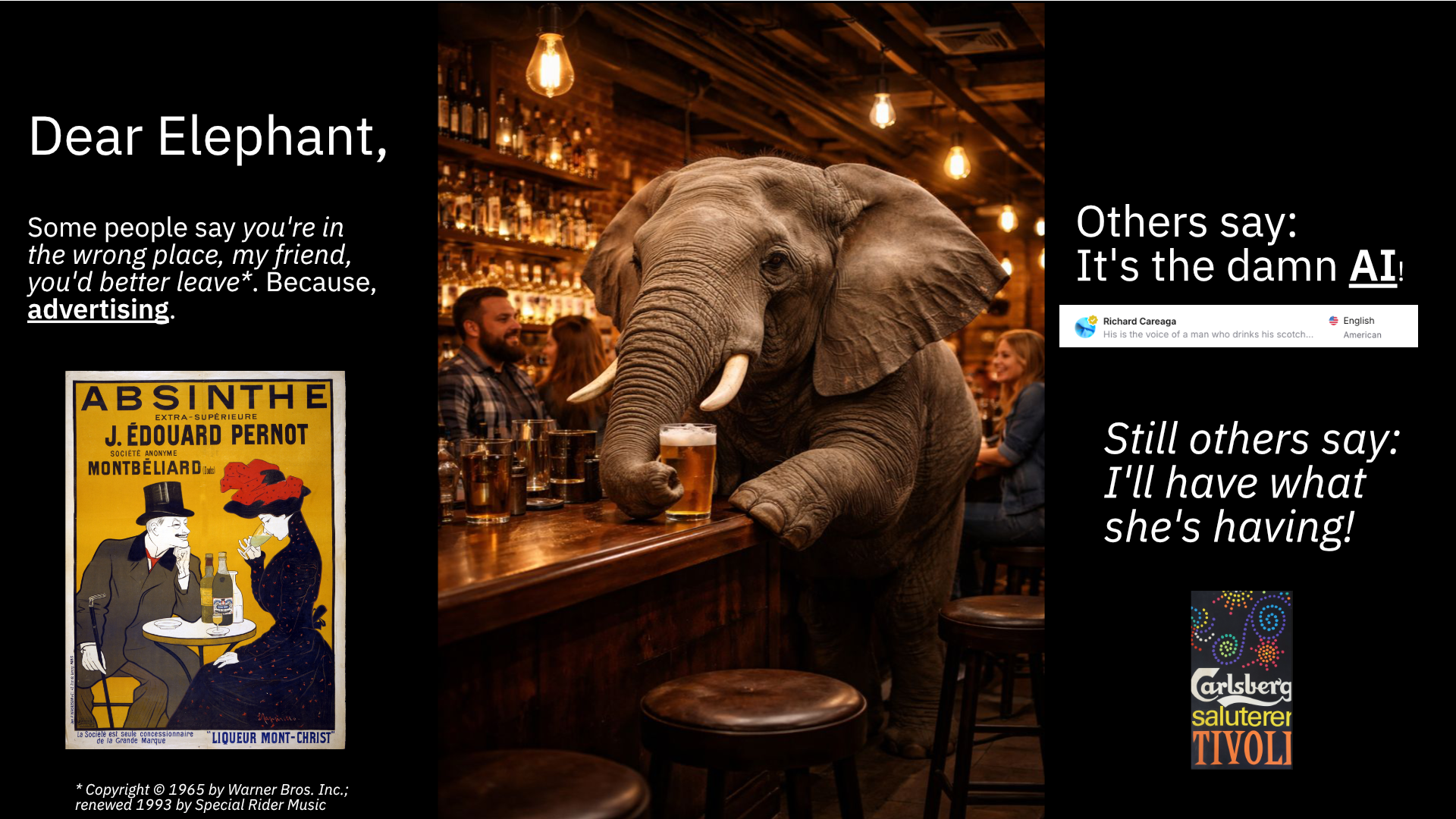
I know, I know. Two things that some viewers may not like.
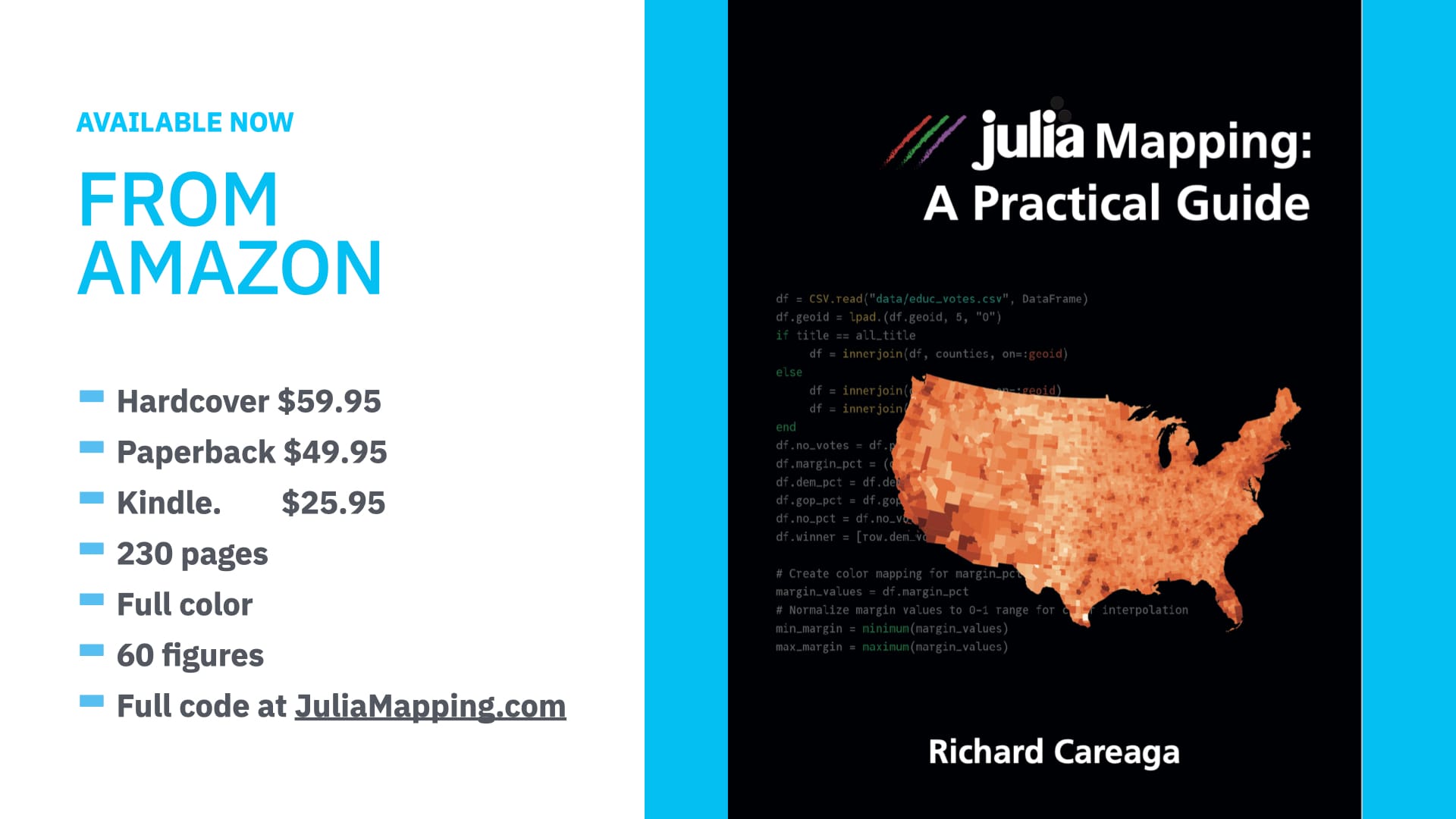
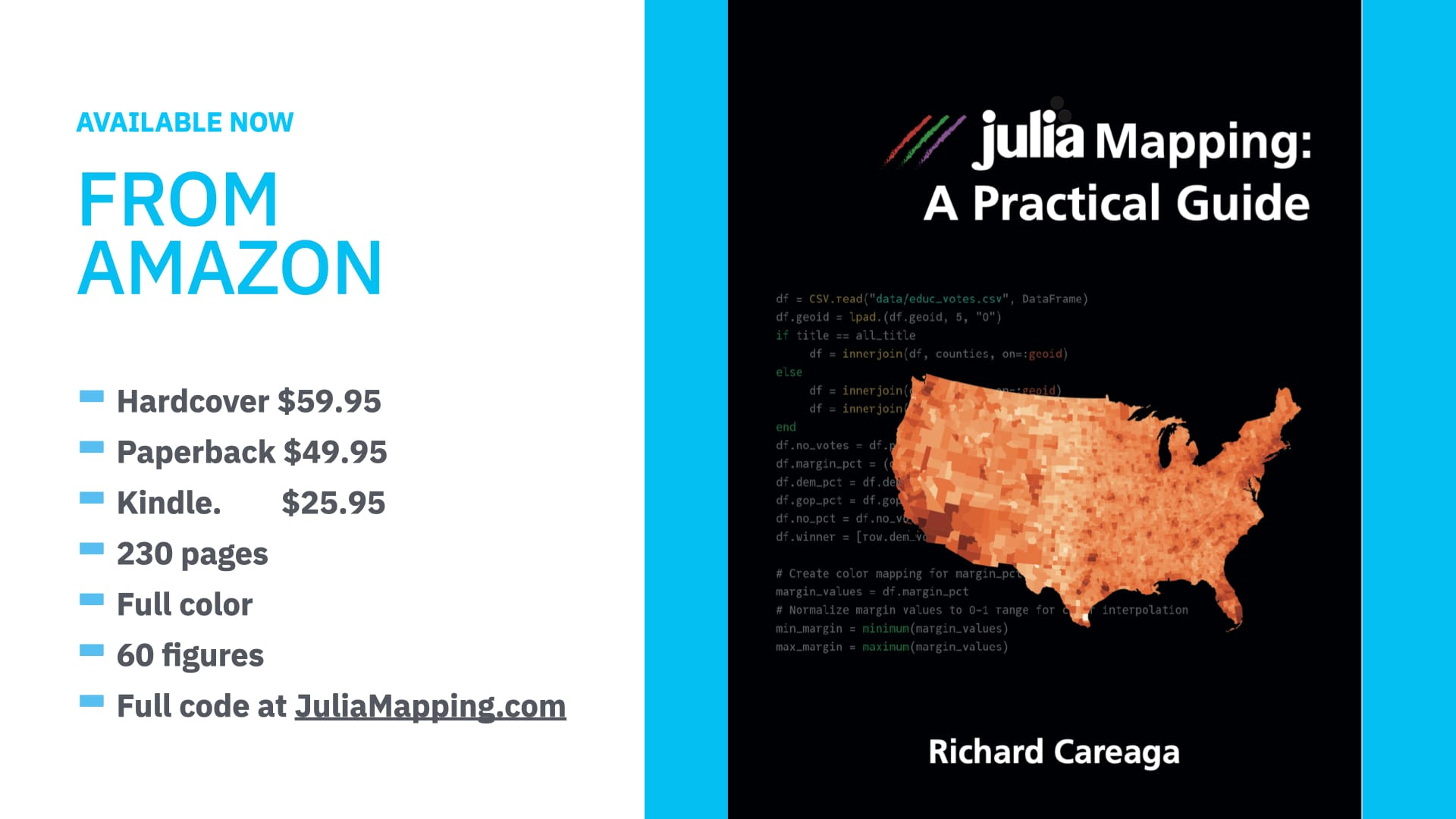
This is an advertisement, an infomercial, for Julia Mapping: A Practical Guide, now available on Amazon.
It was written, and narrated, by Google's NotebookLM. If, for no other reason, listen to hear how incredibly lifelike the conversation between the two synthesized narrator voices sounds.
Also, there are brief appearances by two additional narrators—Bill Playfair, the publisher, and Jayden Broad, the senior technical editor of the Wm Playfair Press™️. These are also synthetic.
Bill is the modern avatar of William Playfair, the founder of modern statistical mapping.
So, why watch, again?
The review introduces two overarching themes of this site.
Julia is a modern programming language with low barriers to entry that provides a gateway to data science for non-programmers. The book shows how to apply its tools to create map visualizations.
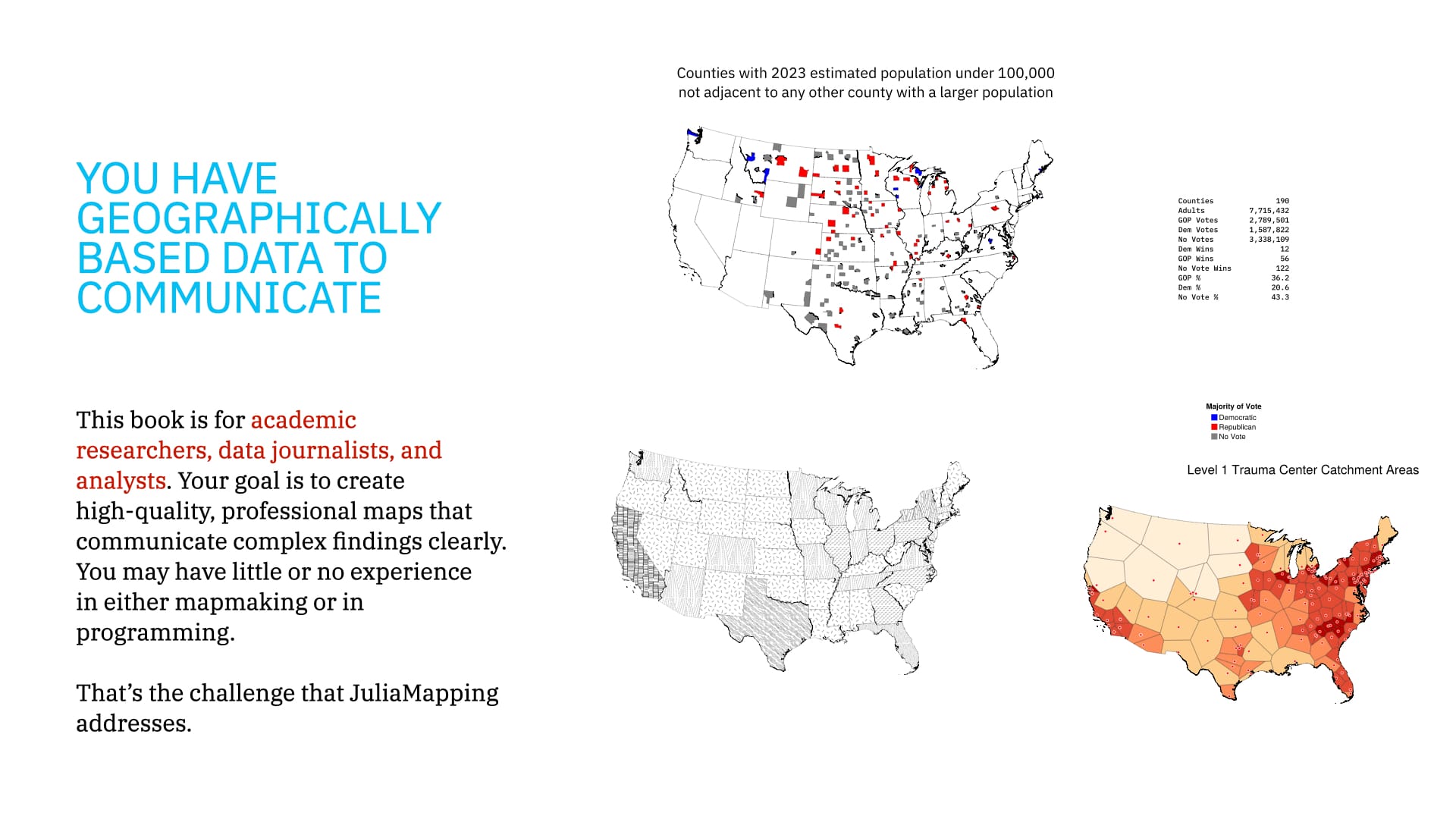
If you are subscribed to Kindle Direct, you can read it for free. You'll find it informative but well laid out for taking notes.
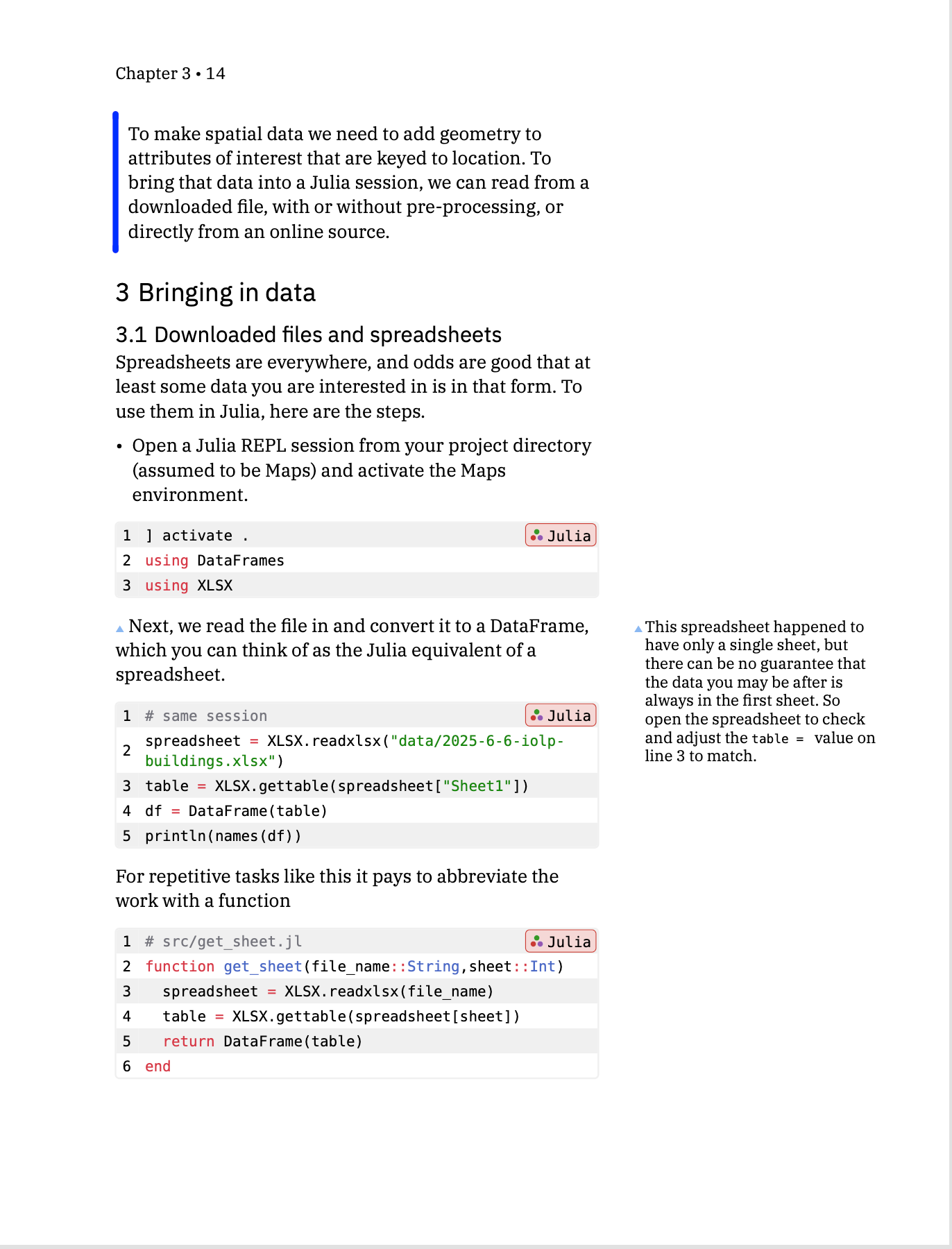
It sets the stage for future posts
These include
- The command line interface (terminal) for those used to the graphical user interface (if you can text, you can type, and if you can type, you can operate the CLI).
- Installing and setting up the Julia programming language
- Versions for macOS/Linux and Windows
- Getting data
- Geographic geometries
- Attribute data
- Working with DataFrames—several short explanations
- Crosswalks—reconciling conflicting divisions of geographic units
- Typography—avoiding paralysis of choices
- Color—why system matters
- Binning—how to divide data
On with the show
 Follow
Subscribe for more
Three tiers, free and with goodies
Buy the damn book
Credits
- Portrait of Turner: stability.ai, public domain
- Turner monogram: G.Mannaerts, used by permission under Creative Commons Attribution-Share Alike 4.0 International license.
- Elephant: stability.ai, public domain
- Absinthe poster: public domain; trademark Pernod Ricard
- NotebookLM: content, public domain; trademark Alphabet, Inc. or affiliates
- Carlsburg poster and trademark: Carlsburg Group or affiliates
- Book cover, Copyright ©️ 2026, Rand Careaga, all rights reserved
- Page extract, Copyright ©️ 2026, Richard Careaga, all rights reserved
- Windows is a trademark of Microsoft Corporation or its affiliates
- macOS is a trademark of Apple, Inc. or its affiliates
- Linux is a trademark of Linus Torvalds
- Diary of a Mad Data Scientist is a trademark of Richard Careaga
- You have data to communicate graphic, Copyright ©️ 2026, Richard Careaga, all rights reserved
- Julia Mapping banner: NotebookLM, public domain
- Julia, the programming language for people who just want solutions, trademark of Richard Careaga
- Julia, the programming language for people who just want solutions, NotebookLM